SEO in 2026 still rewards technically sound, genuinely useful content — but two things changed: Google now answers a growing share of queries directly inside AI Overviews before a user ever clicks a blue link, and AI assistants like ChatGPT and Perplexity have become a real discovery channel alongside Google. Ranking well now means optimising for three layers at once: traditional search rankings (SEO), Google's AI-generated answers (AEO), and citations inside AI chat tools (GEO).
Key Takeaways
- Traditional ranking factors (relevance, backlinks, technical health, E-E-A-T) still matter — nothing about SEO's foundation disappeared in 2026.
- Google AI Overviews now appear on a large share of informational searches, and they pull from pages that answer a question in one clear, self-contained sentence.
- AEO (Answer Engine Optimization) and GEO (Generative Engine Optimization) are additions to SEO, not replacements for it.
- Content written only for AI citation and ignoring human readers tends to underperform — the two audiences want the same thing: a direct, well-supported answer.
- The businesses winning in 2026 are the ones treating AI visibility as a new distribution channel, not a trend to chase with thin, templated content.
If you searched "SEO in 2026" hoping for a list of tricks, this isn't that. Most of what worked in 2022 still works — good content, solid technical health, real backlinks. What's actually changed is where that work gets seen, and that's worth understanding properly before you touch a single page on your site.
What's genuinely different about SEO in 2026
Two shifts matter more than anything else right now:
1. Google answers a growing share of queries before anyone clicks anything
AI Overviews sit above the traditional blue links for a large and growing portion of informational searches. For queries like "what is technical SEO" or "how long does SEO take," Google increasingly generates a synthesized answer directly on the results page, sourced from a handful of pages it trusts — Google documents how these AI-powered results work and what makes a page eligible in its own Search Central guidance on AI features. If your content isn't structured to be quotable, you're invisible for that query even if you'd otherwise rank #1 in the traditional list below.
2. AI chat tools are a real, growing discovery channel
People are asking ChatGPT, Perplexity, and Gemini questions they used to type into Google — "who's a good SEO agency in Ahmedabad," "what's the difference between Shopify and WooCommerce." These tools generate answers from their training data and, increasingly, live web retrieval. If your site isn't structured for an AI model to read, understand, and trust, you don't exist in that conversation. We go deeper on exactly what separates these two channels in our AEO vs GEO vs LLMO breakdown.
SEO, AEO, and GEO: how they actually relate
These aren't three separate disciplines competing for your budget — they're three outcomes of largely the same underlying work, done properly.
| Layer | What it targets | What earns it |
|---|---|---|
| SEO | Google's traditional organic results | Relevance, technical health, backlinks, content depth |
| AEO | Google AI Overviews / featured snippets | A clear, self-contained answer near the top of the page |
| GEO | Citations inside ChatGPT, Perplexity, Gemini | Structured facts, clear authorship, consistent information across the web |
A well-built page can win all three at once. The mistake we see most often is businesses treating AEO and GEO as an entirely separate content strategy — writing robotic, keyword-stuffed "answer boxes" that read badly for humans and, ironically, get skipped by AI models too, since those models are trained to prefer content that reads as genuinely useful. Google's own helpful content guidance says essentially the same thing about human-first writing.
What actually moves rankings in 2026
Technical health, still non-negotiable
Core Web Vitals, mobile usability, crawlability, and clean site architecture remain baseline requirements — see web.dev's Core Web Vitals documentation for the current thresholds. A slow, broken site doesn't get a pass because your content is good — Google can't rank what it can't properly crawl and render. We cover this in full in our 9 technical SEO practices for 2026.
Content that answers the actual question, immediately
The single highest-leverage change most sites can make: open every page with a direct, complete answer to its core question in the first 2-3 sentences, then elaborate below. This is what gets lifted into AI Overviews and quoted by AI chat tools — and, not coincidentally, it's also what keeps human readers from bouncing. Our on-page SEO checklist walks through exactly how to structure this page by page.
E-E-A-T signals that are actually verifiable
Real author bylines with real credentials, dates, and named specifics beat generic "our team" content. Google and AI models both increasingly weight whether a claim can be traced to a real, accountable source.
Structured data across the board
FAQPage, Article, LocalBusiness, and Product schema aren't optional extras anymore — they're the clearest signal you can give both Google's AI and third-party AI models about exactly what your page contains, per Google's own structured data documentation.
A realistic 2026 SEO priority order
Broken crawl paths, missing schema, and Core Web Vitals failures cap everything else you do.
This alone often improves both traditional rankings and AI Overview eligibility.
Pages that already get "how," "what," and "why" style questions are the best candidates.
Author pages, credentials, original data — not more generic blog volume.
Authority signals still compound and still matter to every layer above.
What doesn't work anymore (and mostly never did)
Keyword-stuffed content written purely for algorithms, private blog network links, and AI-generated filler content with no real expertise behind it were always weak strategies — they're simply easier for both Google and AI models to detect and discount now. If your 2026 SEO plan is "publish more AI-written posts faster," you're optimising for the wrong metric. For marketers specifically figuring out where AI tools genuinely help versus where they hurt, we break this down in 6 AI SEO skills every marketer needs.
If you want help applying this to your own site, see our SEO services in Ahmedabad or start with a free SEO audit.
Conclusion
SEO in 2026 isn't a different discipline from the SEO you already know — it's the same fundamentals with two new layers of visibility stacked on top. Fix your technical foundation, write content that answers the question immediately, and build the structured data and authority signals that let both Google and AI models trust what you're saying. Do that consistently and you're positioned for traditional rankings, AI Overviews, and AI chat citations at once — not chasing three separate strategies.
Frequently Asked Questions
Is traditional SEO dead because of AI Overviews and ChatGPT?
No. Traditional ranking factors — relevance, technical health, backlinks, content depth — still determine whether your site is even eligible to be cited by AI Overviews or AI chat tools. AEO and GEO are built on top of solid SEO, not instead of it.
How long does SEO take to show results in 2026?
Similar to before — initial technical fixes can show impact within weeks, but meaningful organic growth typically takes 3-6 months to compound, since Google needs time to re-crawl, re-evaluate, and build trust in a site's improved signals.
What's the single highest-priority SEO change for 2026?
Rewriting key pages so the first 2-3 sentences directly and completely answer the page's core question. This improves both traditional readability and eligibility for AI Overviews and AI chat citations.
Do I need separate content for AEO and GEO, or can one page do all three?
One well-structured page can serve traditional SEO, AEO, and GEO simultaneously. Writing separate 'AI-only' content usually backfires — the same clear, direct, well-supported writing that works for AI models also works for human readers and traditional rankings.
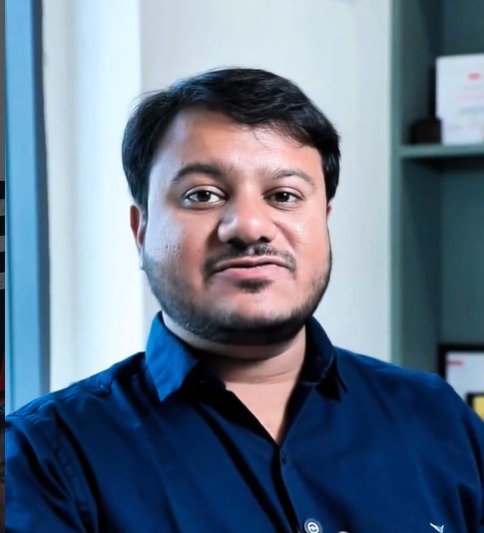
Sambhav Shah
Founder & CEO, Digital Aura
About the author
Sambhav didn't learn digital marketing in a classroom. Starting in 2015, he built his expertise the hard way — self-taught, hands-on, scaling teams and driving growth across industries for over a decade. He's led business development, managed client relationships across continents, built and mentored growing teams, and worn every hat a high-performance agency demands.
With 10+ years of cross-functional experience in client acquisition, team leadership, and digital execution, he's personally involved in strategy — whether it's an SEO plan, a performance campaign targeting international markets, or a web platform built to convert.
Related service
SEO Services in Ahmedabad
Technical, on-page and local SEO that turns searches into enquiries for Ahmedabad businesses.
- SEO audit and strategy
- SEO packages and pricing in Ahmedabad
- Free SEO audit
- SEO for doctors and hospitals